

When to Go to Malta: A Month-by-Month Guide
Malta packs more sunshine into a year than almost anywhere in Europe — but the island you get in April is completely different from the one you get in August. Here's how to pick your moment.
Malta works as a year-round destination, although the type of holiday changes dramatically with the seasons. It sits further south than Tunis, enjoys a remarkably sunny Mediterranean climate through much of the year, and is compact enough that no plan is ever ruined by weather — there's always a museum, a fortified city or a sheltered bay within a short drive. The right month depends entirely on what you want your holiday to be.
Having sold Malta for years, I'll give you the short version up front: June and September are the sweet spots for a classic beach holiday, April, May and October are unbeatable for sightseeing and walking, and November to March is the Mediterranean's best-kept secret for mild winter sun at gentle prices. Now let's look at why.
Malta Month by Month
The figures below are typical long-term averages to guide your planning — individual years always vary a little.
| Month | Avg High | Sea Temp | Rain | Crowds | In Short |
|---|---|---|---|---|---|
| January | 16°C | 16°C | Moderate | Low | Mild, quiet, great value sightseeing |
| February | 16°C | 15°C | Moderate | Low | Carnival month; cool but lively |
| March | 18°C | 15°C | Light | Low | Spring arrives; wildflowers on Gozo |
| April | 20°C | 16°C | Light | Moderate | Perfect sightseeing weather |
| May | 24°C | 18°C | Rare | Moderate | Warm, green, first brave swimmers |
| June | 28°C | 22°C | Rare | Busy | Proper beach weather begins |
| July | 31°C | 25°C | Very rare | Peak | Hot, dry, festa season in full swing |
| August | 31°C | 26°C | Very rare | Peak | Hottest month; sea like a bath |
| September | 28°C | 25°C | Occasional | Busy | Summer without the crowds |
| October | 25°C | 23°C | Moderate | Moderate | Still swimmable; superb value |
| November | 21°C | 20°C | Moderate | Low | One of Europe's mildest winter escapes |
| December | 17°C | 17°C | Moderate | Low | Festive Valletta, mild days |
Two things stand out from that table. First, the sea stays warmer than the air well into autumn — Malta's swimming season realistically runs from June to late October, longer than most of the Mediterranean. Second, even Malta's "bad" weather is gentle: winter rain tends to come in short bursts between sunny spells, not grey week-long stretches.
Spring (March–May): The Explorer's Season
Spring is when Malta is at its most beautiful. The countryside — yes, Malta has countryside — turns briefly green, Gozo is carpeted in wildflowers, and temperatures sit in that perfect 18–24°C window where you can walk the Valletta bastions, the Dingli Cliffs or the Victoria Lines without breaking a sweat.
Best for: sightseeing, walking, photography, couples, anyone who finds high summer too hot. Be aware: the sea is still cool until late May, so this isn't the season for a dedicated beach holiday — though at hotels with indoor or heated pools, you can still enjoy a swim even when the sea feels cool.
Summer (June–August): The Classic Beach Holiday
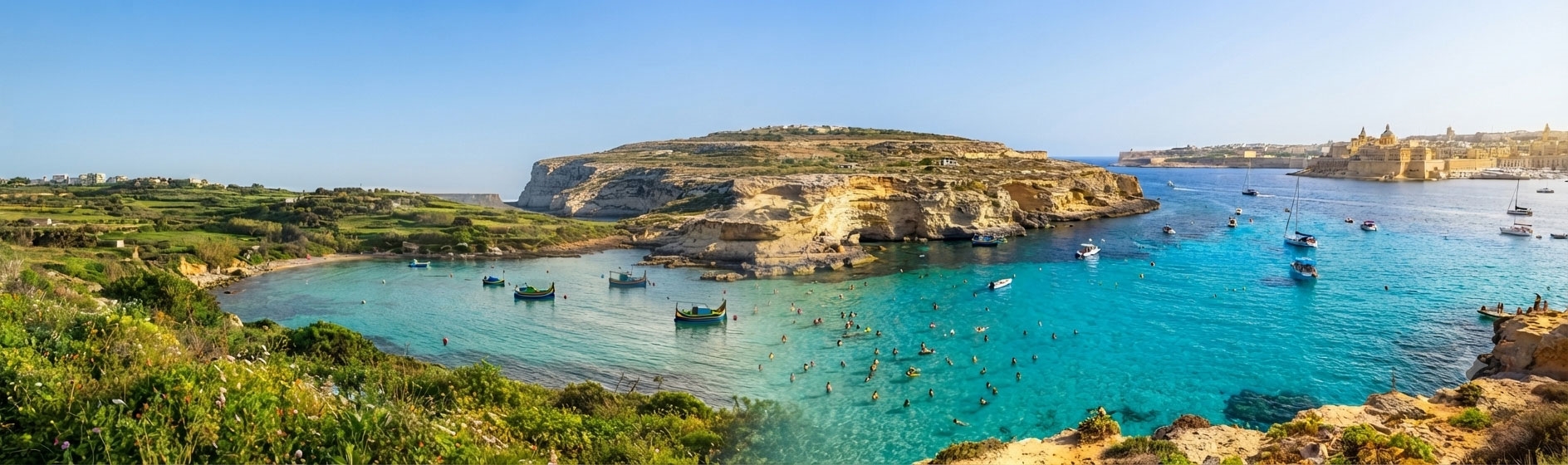
This is the Malta most people picture: long, reliably hot days, a sea warm enough to live in, boat trips to the Blue Lagoon on Comino, and the village festa season — practically every weekend, somewhere on the island, a parish celebrates with band marches and some of the best fireworks in Europe.
Best for: families in the school holidays, beach lovers, nightlife around St Julian's, watersports. Be aware: July and August are hot (regularly above 30°C), the most popular bays get busy, and this is peak pricing. For my own Malta beach holiday, I'd choose June over August every time — essentially the same weather, with noticeably more breathing room and gentler prices.
Autumn (September–October): The Insider's Choice
If I had to pick one window for myself, it would be mid-September to mid-October. The sea is at its warmest hangover from summer, the air has softened to the mid-to-high 20s, the school-holiday crowds have gone home, and hotel rates start easing. Sightseeing becomes pleasant again, and swimming is still absolutely on the menu.
Best for: couples, honeymooners, anyone without school-age children, combining beach and culture in one trip. Be aware: from mid-October the chance of a thundery day increases — rarely enough to spoil a week, but worth knowing.
Winter (November–February): Mild Sun, Gentle Prices
Malta in winter is a different holiday — and a genuinely underrated one. Daytime temperatures usually hold between 15 and 21°C, café terraces stay open, and you'll have Mdina's silent streets, the Hypogeum and the megalithic temples almost to yourself. February brings the Malta Carnival, one of the oldest in Europe, and December turns Valletta genuinely festive.
Best for: winter-sun seekers on a budget, culture lovers, long-stay travellers, anyone escaping a British January. Be aware: it's warm for winter, not warm for swimming — this is a jacket-in-the-evening destination from December to February, and the occasional blustery day is part of the deal.
Match the Month to Your Holiday
| If you want… | Go in… |
|---|---|
| A classic family beach holiday | June–August (June for smaller crowds) |
| Beach weather without peak crowds or prices | September – early October |
| Sightseeing in Valletta, Mdina & the Three Cities | April–May or October |
| Winter sun on a sensible budget | November–March |
| The Blue Lagoon at its calmest | June or September, on an early boat |
| Festivals and local life | February (Carnival) or summer weekends (village festas) |
| Walking on Gozo and the cliff paths | March–May |
Planning a Malta Holiday?
We know Malta's hotels and resort areas first-hand — from family resorts in Mellieħa and St Paul's Bay to adults-friendly stays around Sliema and St Julian's, and quiet escapes on Gozo. Tell us when you want to travel and what matters most, and we'll match you to the right area and the right hotel for that time of year.
Our flight-inclusive package holidays are ATOL protected (ATOL 11211), as confirmed on your ATOL Certificate, and your exact deposit and balance details are always shown before you confirm your booking.
Questions? Email us at hi@gotobeach.co.uk — we'll reply with honest, specific advice.
Frequently Asked Questions
What is the best month to visit Malta?
For most travellers, June and September offer the best overall balance: reliably hot, sunny weather, a warm sea, and lighter crowds and prices than July and August. If sightseeing matters more than swimming, April, May and October are hard to beat.
When is the hottest time of year in Malta?
July and August are the hottest months, with daytime highs regularly around 30–32°C and very little rain. The sea peaks at around 26°C in August — genuinely warm by any standard.
Can you swim in Malta in October?
Yes — comfortably, in most years. The sea typically holds around 22–23°C through October, warmer than the UK's sea ever gets in summer. Many visitors swim well into late October, especially in sheltered bays.
Is Malta warm in winter?
Warm for Europe, yes. Daytime temperatures usually sit between 15 and 21°C from November to February, and sunny days are common. It's ideal for sightseeing and café terraces rather than swimming — pack a light jacket for evenings.
When is the cheapest time to go to Malta?
Generally November to March, excluding the Christmas and New Year period. Flight and hotel prices are at their lowest, and you'll find excellent value at hotels that charge peak rates in summer.
What is the rainiest month in Malta?
December is typically the wettest month, with rain spread across the late-autumn and winter period generally. Even then, Maltese rain tends to arrive in short, heavy bursts between sunny spells rather than settling in for days.
Is August too hot for Malta?
It depends on your tolerance. If your plan is pool, beach and boat trips, August is glorious. If you want to spend hours exploring Valletta and Mdina on foot, the midday heat can be draining — spring, autumn or even June are more comfortable for heavy sightseeing.
When is the best time to visit the Blue Lagoon in Comino?
June and September give you warm, calm water without the busiest crowds. Whenever you go in summer, take one of the earliest boats of the day — the lagoon is transformed before the day-trip rush arrives.
When is Malta Carnival?
The Malta Carnival takes place in February, in the days leading up to Lent, with the main parades and celebrations centred on Valletta and a famously spontaneous version in Nadur on Gozo. Exact dates shift each year with the church calendar.
What are the village festas, and when do they happen?
Festas are parish festivals honouring each village's patron saint — brass bands, decorated streets and spectacular fireworks. They run mainly from June to September, with at least one happening somewhere on Malta or Gozo most summer weekends.
Is Malta good for a family holiday in the school summer break?
Very. The island is compact, flights from the UK are short, sandy family beaches like Mellieħa Bay and Golden Bay are at their best, and many resorts run kids' clubs through the season. Book early for the school holidays — Malta's family hotels fill quickly.
When is the best time for walking and exploring Gozo?
March to May is the standout window — the countryside is green, wildflowers are out, and temperatures are ideal for the coastal paths. October and November are a good second choice once the summer heat breaks.
Twelve Months. Twelve Different Maltas.
Found your month? From summer beach resorts to winter-sun escapes, we'll match your travel dates to the Malta hotels that suit them best.
Explore Malta Holidays