

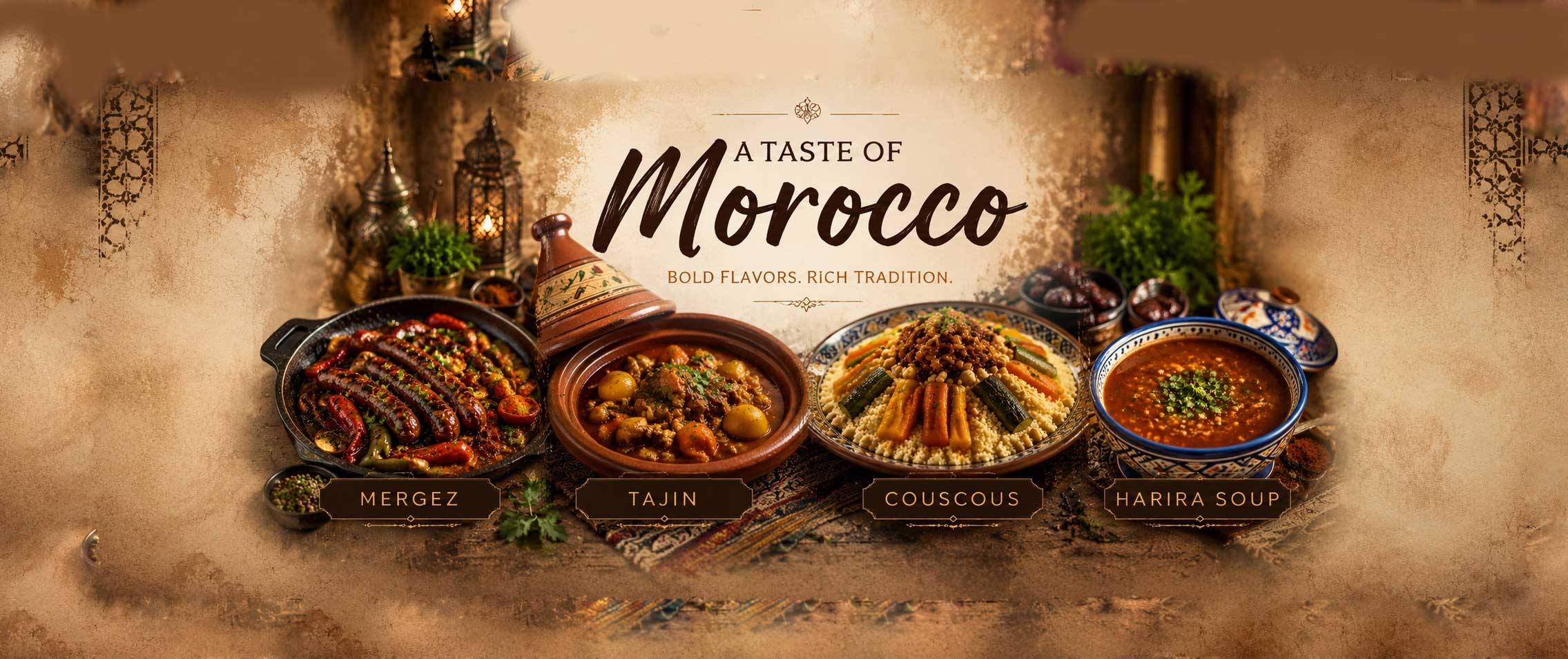
What to Eat and Drink in Morocco: The Complete Food Guide for 2026
Morocco is one of the world's great culinary destinations — a country where food is not simply fuel but a deeply rooted cultural ritual, shaped over centuries by Berber, Arab, Andalusian and French influences. The spices are extraordinary, the ingredients are fresh, the flavours are bold, and the hospitality surrounding every meal is unlike anything you will encounter in Europe. Whether you are heading to Agadir for a beach holiday, exploring the medinas of Marrakech and Fes, or embarking on a cultural round trip across the imperial cities, understanding what to eat and drink in Morocco will enrich every moment of your stay. This is GotoBeach's honest, expert guide to Moroccan cuisine — covering the dishes you must try, the drinks you will love, the dining experiences that genuinely surprise, and the practical realities every traveller should know before they sit down at the table.
The Dishes You Must Try in Morocco
Tagine — The Soul of Moroccan Cooking
There is no dish more synonymous with Morocco than the tagine — and rightly so. Named after the distinctive conical clay pot in which it is cooked, a tagine is a slow-cooked stew of extraordinary complexity and tenderness. The conical lid traps steam throughout the cooking process, creating a self-basting environment that produces meat so tender it falls from the bone, vegetables that retain their colour and character, and a sauce of remarkable depth.
The variety of tagines available across Morocco is staggering. Chicken with preserved lemon and green olives is perhaps the most iconic — a combination of briny, tart and aromatic flavours that is uniquely Moroccan. Lamb with prunes and almonds offers a beautiful sweet-savoury interplay that reflects Morocco's historic spice trade connections. Kefta mkaouara — a tomato-based meatball tagine topped with eggs — is a simpler, more rustic version that is a staple in Moroccan homes. Fish tagine, particularly along the Atlantic coast in Agadir and Essaouira, showcases the quality of Morocco's seafood in a way that is genuinely memorable.
The key spices that define a great tagine — cumin, saffron, ginger, turmeric, cinnamon and ras el hanout — are as important as the main ingredients themselves. A word of advice: if your tagine arrives within fifteen minutes of ordering, it was almost certainly pre-made. A genuine tagine, cooked to order over charcoal, takes two to three hours. Seek out restaurants where you can see the pots cooking — and if possible, order in advance.
Couscous — Morocco's National Dish
Couscous is Morocco's national dish, and its importance extends far beyond the plate. It is a communal food, traditionally prepared on Fridays and served from a shared platter in the centre of the table — a meal that is as much about family and togetherness as it is about flavour. The dish itself consists of fine semolina granules, steamed multiple times over a broth of vegetables and meat until each grain is perfectly light and separate.
The topping varies by region and season. Lamb or chicken with seasonal vegetables is the most common version across the country. In the south, dried fruits — raisins, dates, prunes — are often incorporated, adding sweetness to what is otherwise a savoury dish. Along the coast, fish couscous is a revelation. It is worth noting that the couscous you have eaten at home — from a packet, rehydrated in boiling water — bears only a passing resemblance to authentic Moroccan couscous. The real thing, hand-rolled from semolina and steamed three times over a slow-cooked broth, is in an entirely different category.
Harira — The Soup That Defines Moroccan Hospitality
Harira is one of Morocco's most important dishes — a rich, fragrant, deeply satisfying soup that holds genuine cultural significance. Made with tomatoes, lentils, chickpeas, fresh herbs and an aromatic combination of spices including coriander, parsley, ginger, pepper, cinnamon and turmeric, harira is the soup most associated with breaking the fast during Ramadan. It is traditionally served at sunset throughout the holy month, accompanied by chebakia — a honey-drenched fried pastry — and dates. But it is available year-round in restaurants across the country.
A well-made harira is thickened with a flour-and-lemon mixture stirred in at the end of cooking, giving it a body and richness that distinguishes it from a standard soup. It is typically served with crusty bread for dipping, and at a price that makes it one of the most accessible and authentic meals available to any visitor.
Merguez — North Africa's Finest Sausage
Merguez is a spiced lamb or beef sausage that is one of the great underrated pleasures of North African cuisine. Seasoned with harissa, cumin, fennel seeds and a blend of warming spices, and grilled over charcoal until the skin is crisp and the interior is juicy and deeply flavoured, a properly made merguez is an extraordinary thing. The heat from the harissa is present but not overwhelming — it builds gradually and complements rather than dominates the flavour of the meat.
In Morocco, merguez is eaten in a variety of ways — stuffed into a crusty roll for a street food sandwich, served alongside couscous, or presented as part of a mixed grill at a restaurant. In the food stalls of Jemaa el-Fna square in Marrakech, you can watch merguez being cooked over open charcoal grills in the evening and eaten immediately — one of the great street food experiences on the African continent.
Pastilla — Sweet, Savoury and Uniquely Moroccan
Pastilla is one of the most surprising and sophisticated dishes in Moroccan cuisine — and one that invariably stops first-time visitors in their tracks. Originally from Fes, pastilla is a flaky pastry pie filled with spiced chicken or pigeon meat, almonds, eggs, coriander and saffron, finished with a dusting of cinnamon and icing sugar. The combination of savoury meat and sweet pastry, of flaking pastry and rich filling, of warming spice and delicate sweetness, is a flavour experience with no real equivalent in European cooking. For the most authentic version, seek out the traditional riads and medina restaurants of Fes or Marrakech.
Zaalouk — The Smoky Aubergine Dip
No Moroccan meal begins without a selection of salads and dips, and zaalouk is the finest of them. This smoky, deeply flavoured aubergine dip is made by roasting aubergines until charred, then blending them with tomatoes, garlic, olive oil, cumin, paprika and chilli powder. The result is a dip of extraordinary complexity — smoky, spicy, rich and entirely moreish. It is served at room temperature with freshly baked Moroccan bread, and it is one of those dishes that disappears from the table before you have even noticed you are eating it.
B'ssara — Morocco's Breakfast Soup
B'ssara is Morocco's great working-class dish — a thick, creamy soup made from dried fava beans, simmered slowly with garlic and olive oil and finished with cumin and paprika. It is primarily a breakfast dish, consumed early in the morning from small street-side cafés where it is served piping hot with freshly baked bread. In terms of price, it is extraordinarily affordable. In terms of flavour, it is deeply satisfying — hearty, warming and full of the earthy richness of the beans. For travellers who want to eat as Moroccans eat, a morning bowl of b'ssara is the place to start.
Msemen — Morocco's Irresistible Flatbread
Msemen are square, flaky flatbreads made by folding oil-enriched dough into multiple layers and frying until golden and crisp on the outside, soft and layered within. They are one of Morocco's great breakfast staples — served hot with honey and butter and accompanied by mint tea, they are an extraordinarily good way to begin a Moroccan day. You will find them in virtually every café and street-side stall across the country, freshly made and served immediately.
What to Drink in Morocco
Moroccan Mint Tea — The National Drink
Morocco's national drink is not alcohol — it is mint tea, and it is treated with a reverence and ceremony that goes far beyond simple refreshment. Known locally as atay naa naa, and affectionately nicknamed "Moroccan whisky" by locals with a sense of humour, Moroccan mint tea is made from gunpowder green tea brewed with fresh spearmint and a considerable quantity of sugar. It is poured from a height into small glass cups, and it is typically served three times in succession. The ritual of Moroccan tea is a gesture of hospitality, warmth and welcome — to be offered tea in Morocco is to be received as a guest rather than a customer.
Fresh Fruit Juices
Morocco produces an abundance of fresh fruit — oranges, pomegranates, avocados, strawberries, watermelons and dates among them — and the fresh juice stalls that line the streets of every major city are one of the country's great simple pleasures. Fresh-squeezed orange juice — from Morocco's extraordinary sweet oranges — is the standout, but pomegranate juice, avocado smoothies and mixed fruit combinations are all equally worth trying. These juices represent some of the best value food and drink experiences available anywhere in the country.
Coffee — Café Cassé and Café Noir
Morocco has a strong café culture, heavily influenced by its French colonial period, and coffee is taken seriously across the country. The two most common orders are café cassé — espresso diluted with hot milk, similar to a café au lait — and café noir, a straight black espresso. Both are typically served with a small glass of water and, in traditional establishments, with a piece of chebakia or a date on the side. Sitting in a local café with a café cassé and a msemen, watching the world go by, is one of the more pleasurable ways to spend a Moroccan morning.
Lben — Fermented Buttermilk
Lben is traditional Moroccan fermented buttermilk — a slightly sour, refreshing drink that is an integral part of everyday Moroccan cuisine, particularly in rural areas and traditional households. It is traditionally served alongside couscous at Friday family meals, as its acidity cuts through the richness of the dish and aids digestion. For visitors curious about authentic Moroccan food culture, trying a glass of lben with a traditional couscous is an experience worth having.
Alcohol in Morocco
Morocco is a predominantly Muslim country, and attitudes towards alcohol are conservative. Alcohol is not served in public spaces, in medinas, or in traditional Moroccan restaurants. However, in resort areas — particularly in Agadir — alcohol is widely available in hotel bars, beach clubs and licensed restaurants. The local beer, Casablanca, is a clean and refreshing pale lager that pairs well with the heat and the food. Travellers accustomed to freely available alcohol throughout a beach holiday should be aware that Morocco operates very differently from Turkey, Greece or Spain in this respect.
Honest Advantages and Disadvantages of Eating in Morocco
At GotoBeach, we believe in honest advice. Here is our candid assessment of the Moroccan food and dining experience.
Advantages
✔ Moroccan cuisine is genuinely world-class — complex, fragrant, diverse and deeply satisfying in a way that few national cuisines can match
✔ Fresh ingredients are outstanding throughout the country, particularly the citrus fruits, olives, vegetables and seafood
✔ Food is extraordinary value for money — even a full restaurant meal in a traditional setting is very affordable by UK standards
✔ The diversity of dishes is remarkable — from the slow-cooked grandeur of a tagine to the immediacy of street food in Jemaa el-Fna
✔ Vegetarian and vegan travellers are generally well-served — couscous with vegetables, zaalouk, harira, b'ssara and a vast selection of salads all offer meat-free options of genuine quality
✔ The dining experience itself is as memorable as the food — eating in a riad courtyard in Marrakech or at a seafront restaurant in Essaouira is a genuinely special occasion
Disadvantages
✖ Alcohol is severely limited outside resort hotels — travellers expecting freely available wine or beer will find Morocco considerably more restrictive than other Mediterranean destinations
✖ Hygiene standards vary significantly — street food carries a higher risk for travellers with sensitive digestions; stick to busy stalls with high turnover
✖ Tourist-oriented restaurants in heavily visited areas can be significantly overpriced relative to their quality — learning to identify local establishments is essential
✖ The intensity of spicing can be challenging for those with a low tolerance for cumin, coriander and chilli heat
✖ The limited availability of alcohol means the beach bar experience is largely confined to licensed hotel and resort environments
Practical Dining Tips for Morocco
Eat where the locals eat. The single most reliable indicator of quality in Morocco is the presence of local customers. If a restaurant is full of Moroccans at lunchtime, the food is almost certainly good.
Friday is couscous day. If you want to eat the best couscous Morocco has to offer, do so on a Friday — when traditional households and restaurants across the country prepare it fresh as part of the weekly family meal ritual.
Order tagines in advance. A genuinely slow-cooked tagine requires two to three hours. Ask when you arrive whether they cook tagines to order — and if so, order it immediately and explore the medina while it cooks.
Respect the tea ceremony. When offered mint tea, accept it. The ritual of pouring and serving is an important cultural gesture, and declining it can be considered impolite.
Be cautious with street food. Choose stalls that are busy, cooking fresh, and where the food is prepared to order. Avoid raw shellfish and salads in street food environments.
Book Your Morocco Food Holiday with GotoBeach
Morocco's culinary culture is one of the most compelling reasons to visit — and as the UK's only dedicated Morocco specialist, GotoBeach offers a range of holidays that allow you to experience it fully. From all inclusive resort holidays in Agadir to cultural round trips through the imperial cities of Marrakech, Fes, Meknes and Rabat, we have the perfect Morocco holiday for every type of food lover. Your Moroccan culinary adventure starts here.
What to Eat and Drink in Morocco FAQ
What is the national dish of Morocco?
Couscous is Morocco's national dish — fine semolina granules steamed over a broth of vegetables and meat, traditionally served on Fridays as a communal family meal. Tagine is arguably more internationally famous, but couscous holds the deeper cultural significance within Morocco itself.
What is a tagine?
A tagine is both the conical clay cooking vessel and the slow-cooked stew prepared inside it. The cone-shaped lid traps steam during cooking, producing extraordinarily tender meat and aromatic sauces. Common varieties include chicken with preserved lemon and olives, lamb with prunes and almonds, and fish tagine along the Atlantic coast.
What is harira soup?
Harira is a rich, fragrant Moroccan soup made with tomatoes, lentils, chickpeas, fresh herbs and warming spices including coriander, parsley, ginger, cinnamon and turmeric. It is the soup most associated with breaking the fast during Ramadan, but is available year-round and is one of the most authentic and affordable dishes in Morocco.
What is merguez?
Merguez is a spiced lamb or beef sausage, seasoned with harissa, cumin and fennel seeds, grilled over charcoal. It is a staple of Moroccan street food and restaurant dining, and at its best — freshly grilled and eaten immediately — it is one of the finest sausages in the world.
What do Moroccans drink?
Morocco's national drink is mint tea — gunpowder green tea brewed with fresh spearmint and sugar, poured from a height and served in small glass cups. Fresh fruit juice, particularly orange juice, is also exceptional. Coffee in the French café style is widely available. Alcohol is limited to licensed hotel bars, beach clubs and certain restaurants.
Can you drink alcohol in Morocco?
Alcohol is not freely available in Morocco. It is not served in medinas, traditional restaurants or public spaces. In resort areas such as Agadir, alcohol is available in hotel bars and licensed beach clubs. Travellers expecting freely available alcohol should be aware that Morocco operates very differently from other Mediterranean destinations.
Is Moroccan food spicy?
Moroccan food is heavily spiced but not, by general standards, particularly hot. The cuisine relies on aromatic spices — cumin, saffron, ginger, cinnamon, coriander — for its distinctive flavour. Chilli heat is present in dishes like harissa and merguez, but the majority of traditional Moroccan cooking is warming and fragrant rather than aggressively spicy.
Is Morocco good for vegetarians?
Yes. Moroccan cuisine offers excellent options for vegetarians — including vegetable tagines, couscous with seasonal vegetables, harira soup, zaalouk, b'ssara and a broad selection of salads and dips. It is worth clarifying in traditional local establishments whether soups and couscous have been made with a meat-based broth.
What is Moroccan mint tea?
Moroccan mint tea — known locally as atay naa naa — is gunpowder green tea brewed with fresh spearmint and sugar, poured from height to aerate the liquid and create a characteristic froth. It is Morocco's national drink and its most important cultural hospitality gesture. It is always sweet — the sugar is an integral part of the preparation, not an optional addition.
Editorial Disclaimer
This article was written and published based on the knowledge, experience and information available to the GotoBeach team at the time of writing. Whilst every effort has been made to ensure accuracy, restaurant recommendations, prices, seasonal availability and operational details are subject to change without notice. GotoBeach accepts no liability for any inaccuracies or omissions that may have occurred following the date of publication. We strongly recommend confirming all details with a GotoBeach specialist before booking.
GotoBeach is ATOL protected. Your travel is financially protected.
Published by GotoBeach.co.uk on 8 May 2026 — The UK's Only Morocco Specialist
© GotoBeach. All rights reserved.